Inspiring work. I’ve seen Rinus Roelofs before and I’ll look into the others.
One of the things I like best about this kind of work is how each piece makes people want to touch them. It’s not quite enough to just look at them although I suspect alarms would go off if you tried to touch most of these pieces.
Robert Longhurst’s work is interesting in that the material quoted in the one above and others is “Occume Plywood” which looks ideal for bending into curved surfaces although there is clearly some considerable skill involved in doing this to the standard seen in these sculptures.
3d printing is amazing tech for realising complex shapes and bypasses many design constraints but the materials are so far mostly plastic or expensive and don’t have the same tactile properties of wood and stone.
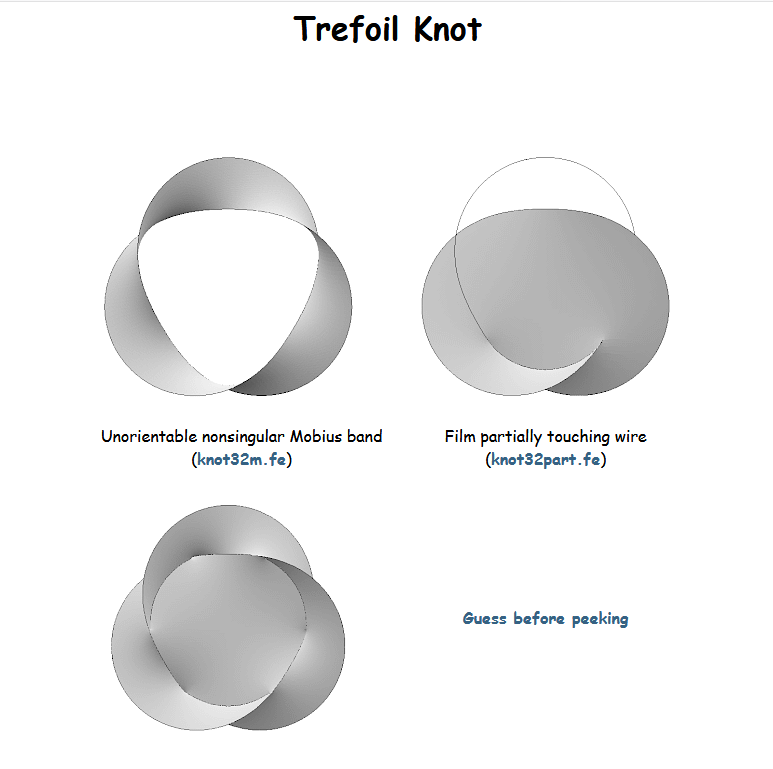
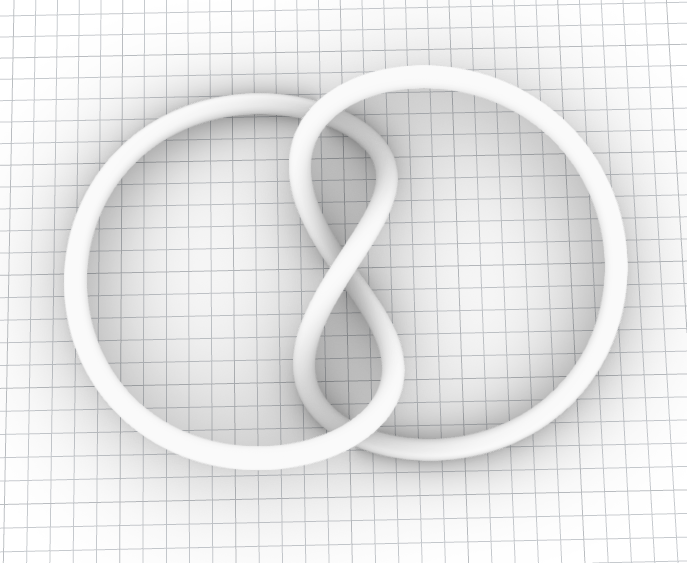
In terms of designing these kind of surfaces, googling often serves up formulae but rarely explains how these formulae are used in software such as Rhino/GH to create the surface. For example… I wikipedia’d torus knots and came up with the formulae to create x,y coordinates from a series of angles…

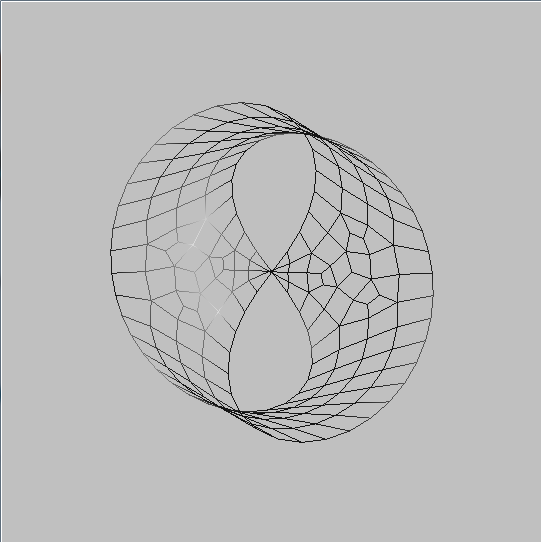
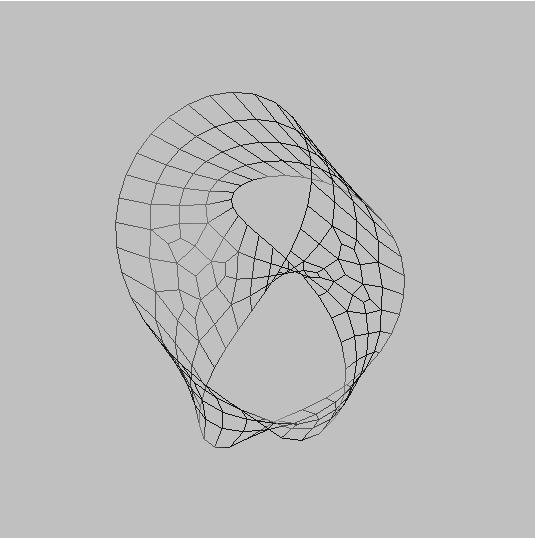
This gave me a curve but not a surface. Is it always the case (for Rhino / GH at least) that one has to start with curves and then sweeep / loft etc to create a surface? Or is there a way(s) to go from formulae straight to surface?