Hello!
I am trying to optimize shading panels for a glass facade using three fitness objectives: total surface area of material used, total hours of incident radiation, and visibility rate of natural elements outside the room. Besides parameters for the design of the panels, I let Wallacei choose the best points in a garden for the positioning of vegetation (for aditional shadows on facade, and increase in biophilia).

My isse is that after I run the simulation, I noticed that more than 3800 (among 5000) individuals have the exact genome. The search space is huge, 2.2e14, with 14 genes, and I have tested different parameters. The result I cite above had the following ones:
- 50/100 ind./gener.
- 0.9 Crossover Prob.
- 0.5 Mutation Prob.
- 10 CO Distribution Index
- 10 Mut. Distribution Index (I understand the smaller these last two, more variation?)

I thing I noticed is it seems my problem doesn’t allow for all three fitness objectives be optimized at the same time. It makes sense… if the shading is great, it means it used lots of bigger panels, so area and visibility sucks, and vice-versa.
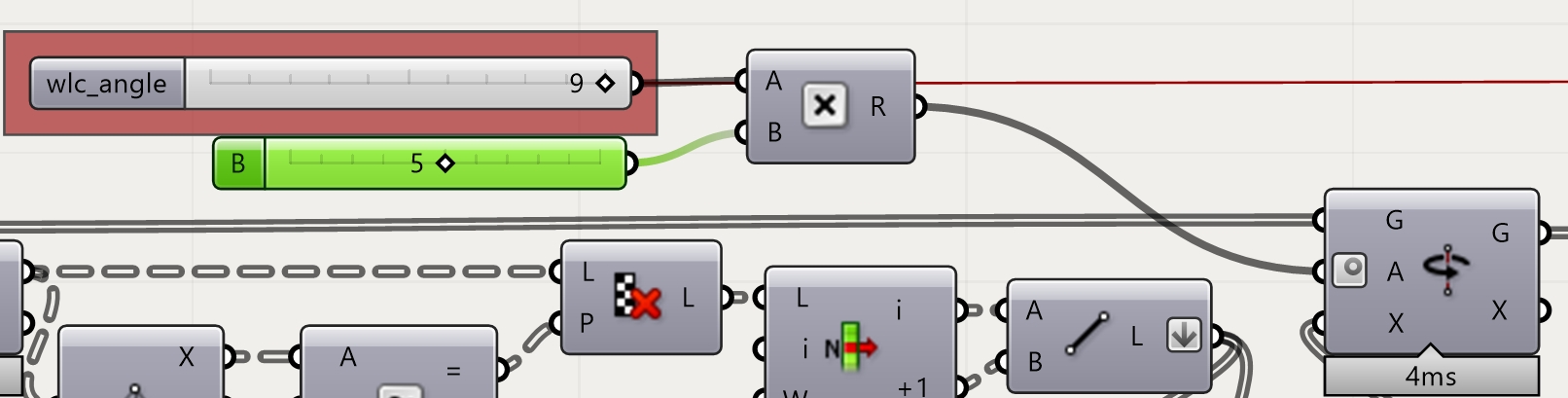
Or maybe it’s because about half my genes have only a few values available? My idea was to use step multipliers for some parameters so it doesn’t need to consider too many intermediate values that won’t bring too many difference to the design / fitness values, like in this angle parameter that goes from -45 to 45, in steps of 5 degrees.
Also, the generations seems to get slightly worse than it had been at some point, as the SD graph shows: Better mean values in general, but it loses convergence? So why the repeated solutions / genome? This bugs me.
What are your thoughts on this issue? Even though the search space is huge, is the problem too simple? Are my wallacei parameters badly calibrated? Or my genes should be improved?
The GH definifition goes attached.
Thanks!!